kore siciliæ
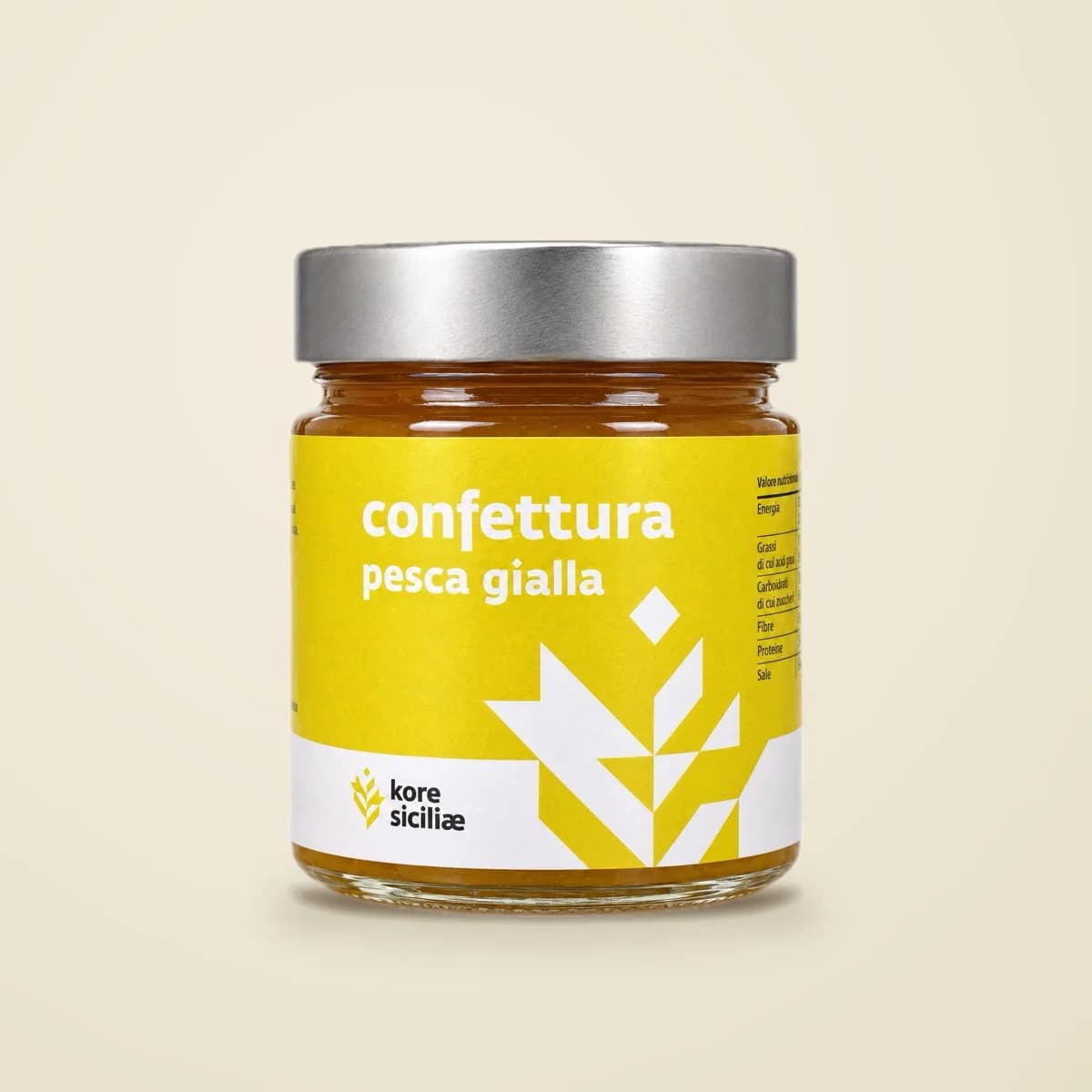
Leonforte Peach jam (yellow flesh) 250 g
Kore Siciliæ · Leonforte
Artisan jam made with yellow-flesh Leonforte peaches, sweet and fragrant.
€ 6.90
Kore Siciliæ · Leonforte
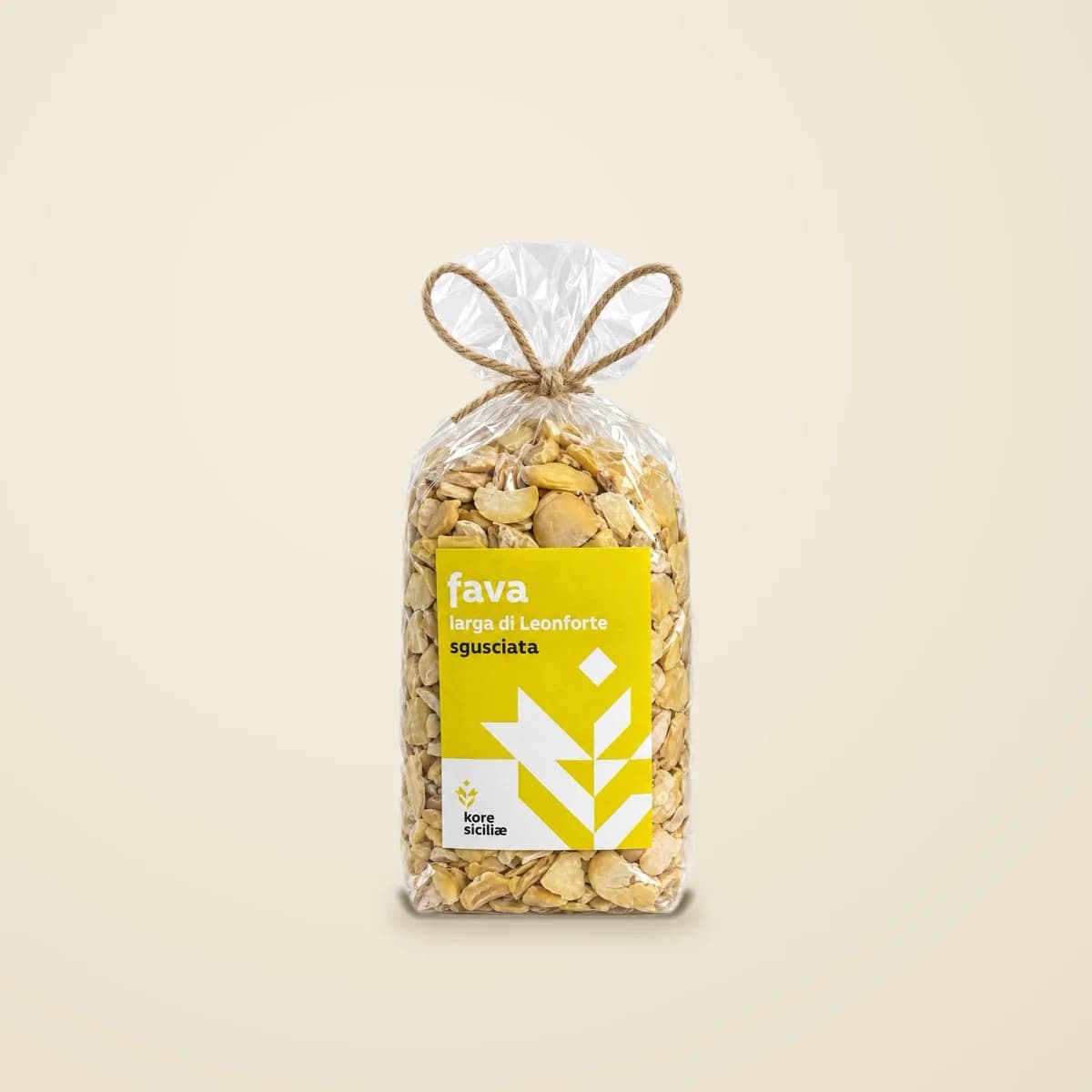
Shelled Leonforte broad bean, ready for soups and macco.
Leonforte broad bean, already shelled: convenient and quick, keeping all the flavour of the traditional pulse.
Perfect for macco and creamy soups.
Ingredients, allergens and nutrition facts
We are transcribing the labels onto the website. Before buying, you can ask the consortium for this product's ingredients, allergens and nutrition facts:
History and land
Diogenes Laërtius tells how Pythagoras, chased by his enemies, found himself in front of a field of broad beans. Forced to choose between trampling it or being caught and killed, he chose the latter. He had a horror of beans: he saw in the black spot on the white flower the mark of the gods of the underworld, and believed the plant’s hollow stem was a channel to the realm of the dead. Since the time of the Egyptian pharaohs, a seed shaped like both male and female genitals had made beans ambiguous, shameless and a source of mental disorder. Socrates claimed that Hercules loved them, but warned ordinary mortals that eating them stood in the way of seeking the truth.
In ancient Rome beans were rediscovered as “the meat of the poor”: nourishing and cheap, they fed athletes and commoners, soldiers, farmers and gladiators. Many families grew rich trading them, first of all the Fabii, who took their name from the precious legume. On solemn occasions beans were thrown to the crowd for good luck, and the Roman Senate voted by dropping black beans into the urn to dissent or white ones to say they were “in favour”.
Since time immemorial the farmers of Enna have said “a favata cummatti c’a mal’annata” (beans fight off a bad year): dried beans are an essential store against times of scarcity and, sown in rotation with durum wheat, they enrich the soil with nitrogen, which wheat consumes greedily. The most prized variety is the “Fava larga di Leonforte”, also called “Fava Turca”, unique in the Mediterranean for its exceptional size and valued for how well it keeps, how easily it cooks and its “buttery” texture.
Besides Leonforte, it is harvested at the end of March in Assoro, Nissoria, Enna and Calascibetta, where until fifty years ago it was an important source of income for local farmers. Then it was forgotten, only to be revived in recent years by a group of stubborn grower-custodians who recovered the old seeds and the old manual methods. Its value in the kitchen comes mainly from the particular nature and structure of the soil and from Leonforte’s mild climate, with rain concentrated in autumn and winter and almost none in summer.
Texts from the historical and food profiles written by experts for the consortium.
Kore Siciliæ · Leonforte
Artisan jam made with yellow-flesh Leonforte peaches, sweet and fragrant.
Kore Siciliæ · Leonforte
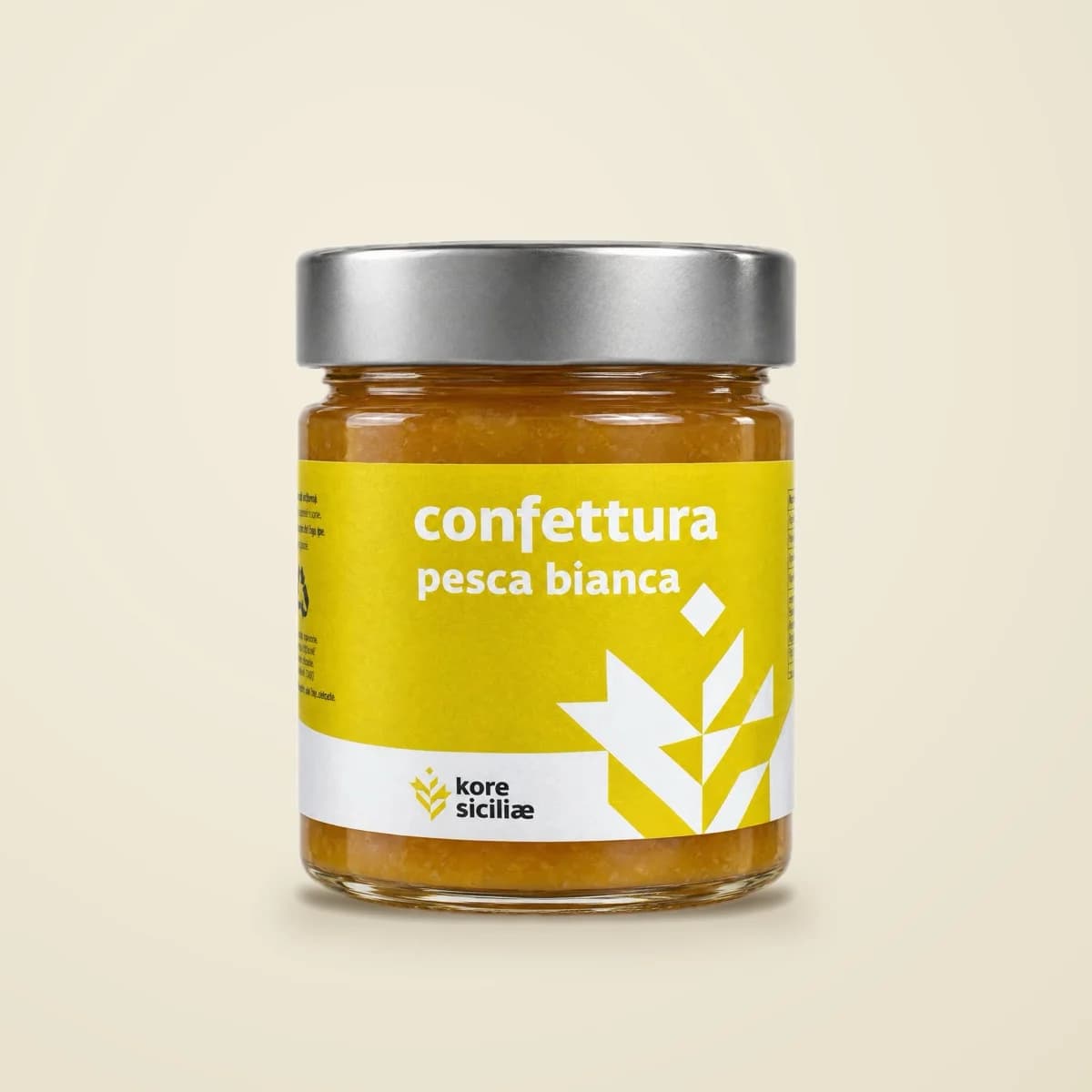
Jam made with white-flesh Leonforte PGI peaches, delicate and aromatic.
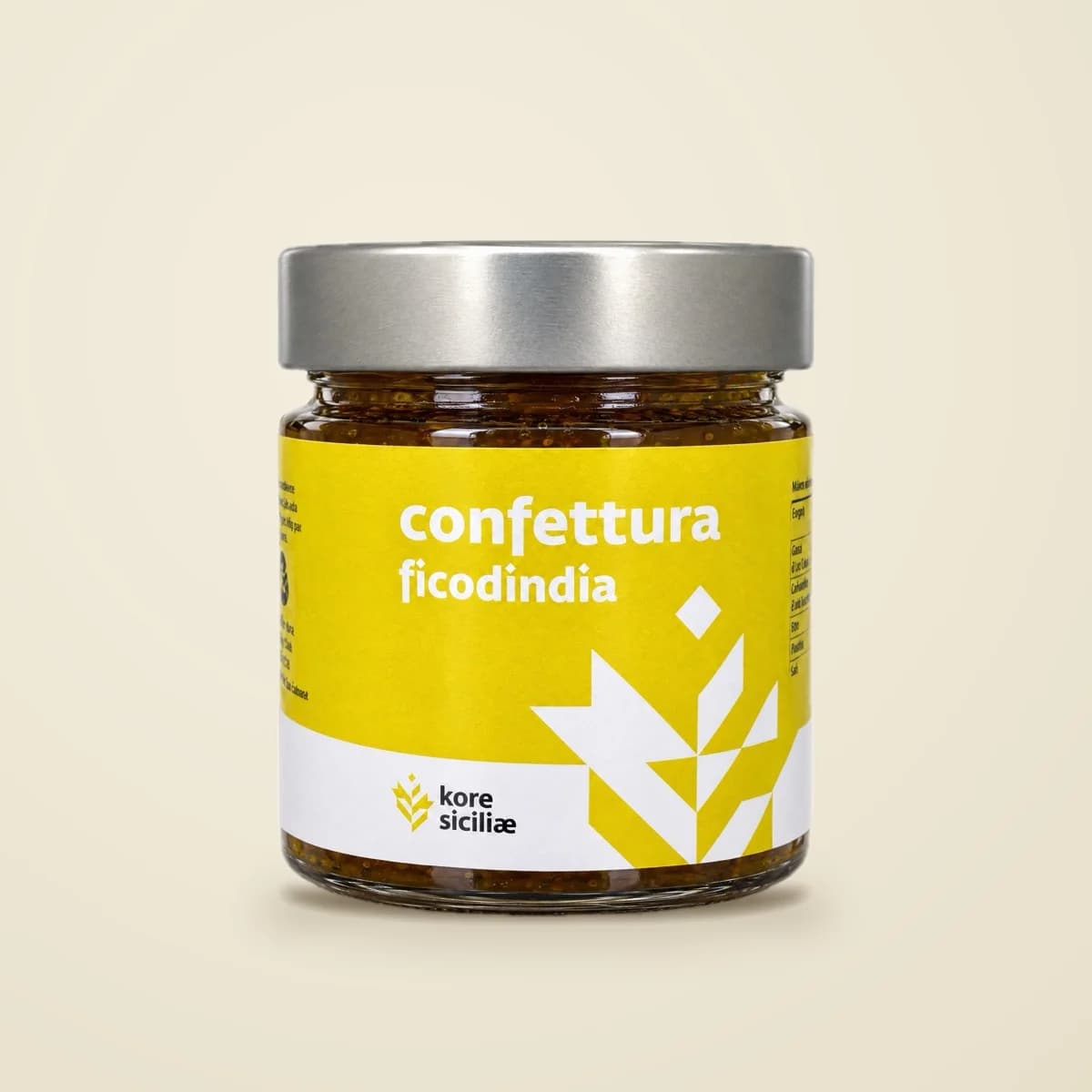
Kore Siciliæ · Enna
Sicilian prickly pear jam with a sweet, unmistakable taste.