Kore: the myth of love and spring
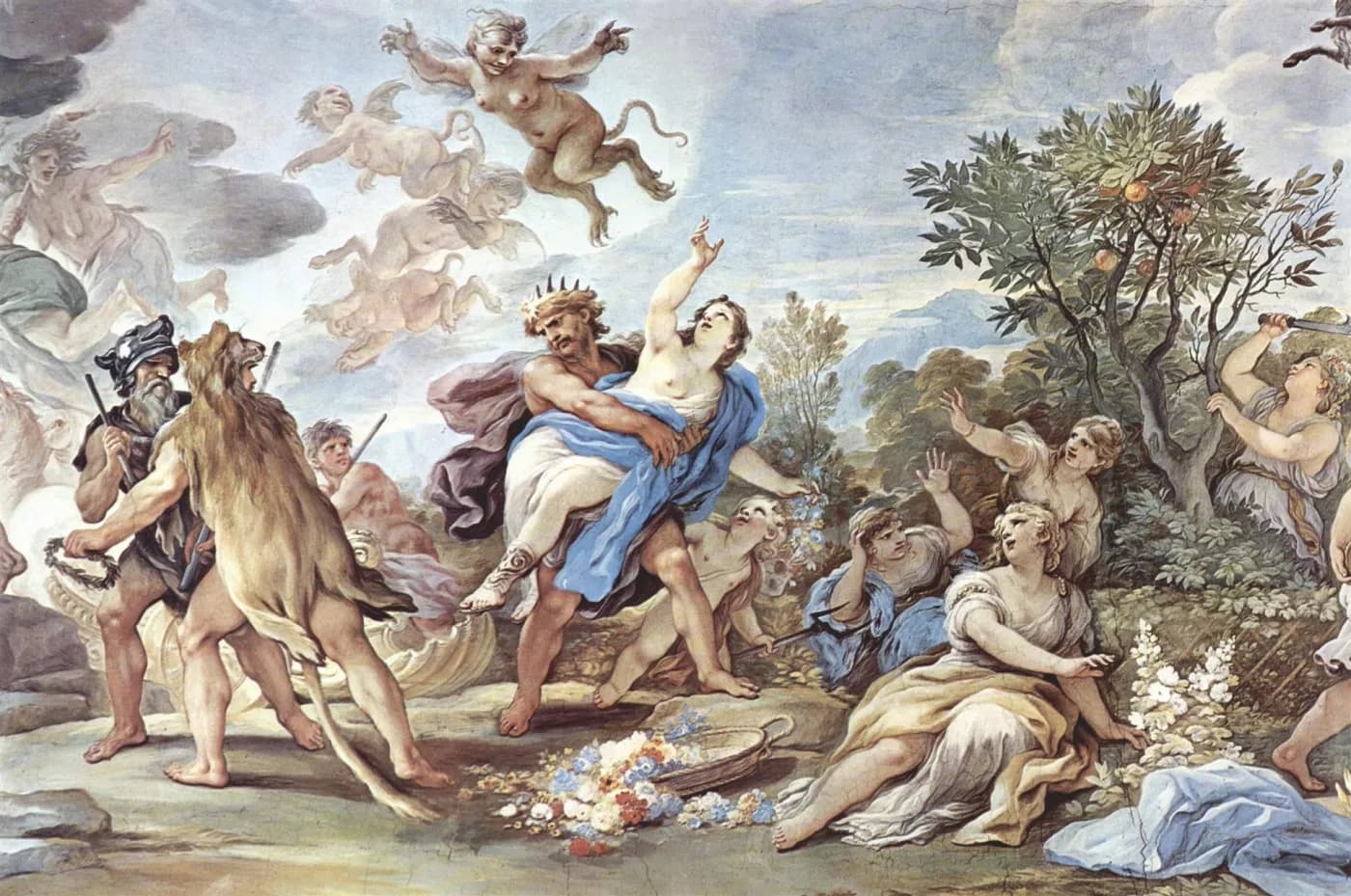
According to Greek mythology, Kore was the daughter of Demeter, goddess of the earth and of fertility, and of Zeus, the mighty lord of the gods. Young Kore lived happily among the flowering fields of Sicily, where her beauty was admired by all, but in particular by Hades, the god of the underworld. One day, while Kore was gathering flowers in an idyllic Sicilian meadow, the earth opened and Hades emerged from the subterranean realm. Enchanted by her beauty, he abducted her and carried her off with him into the dark world of the underworld. Kore’s mother, Demeter, in despair at her daughter’s disappearance, refused to let the earth bloom, bringing chaos and famine to the world. Zeus, worried about the consequences of this situation, intervened and negotiated an agreement with Hades. Kore would spend half of the year with him in the underworld and the other half with her mother on earth. This agreement became the symbol of the alternation of the seasons: when Kore was with Demeter, the earth flowered and spring and summer spread, while when she was with Hades, cold and winter made themselves felt. Kore’s bond with Sicily is particularly significant. According to some versions of the myth, it was the Sicilian island itself — and in particular Lake Pergusa, near Enna — that was the place where the abduction occurred. Enna witnessed the divine drama and the sorrow of Demeter, which explains the fertility and beauty of its landscapes.
A METAPHOR FOR MODERN TIMES
But what can we learn from this ancient legend, and how can we interpret it in modern times? Kore represents transformation and rebirth. During the period when she was with Hades, she was known as Persephone, queen of the underworld. During this phase, nature seemed asleep and dead. Yet when Kore returned with Demeter, she regained her original identity and the earth awoke in a riot of colours and scents. This alternation between darkness and light, between winter and spring, can be seen as a metaphor for modern times. We pass through periods of challenge and difficulty, in which everything seems shrouded in darkness. But it is precisely during these moments that we can find the strength to transform ourselves and to be reborn, as individuals and as a society. The myth of Kore teaches us that life is made of cycles, of highs and lows, of moments of joy and moments of sorrow. It is a call to remember that even after the darkest periods, the light always comes. The story of Kore invites us to find hope and trust in the possibility of a personal and collective rebirth. The challenges we face today — such as economic crises, climate change or pandemics — may seem insurmountable. But just like Kore, we can find the inner strength to face these difficulties and transform them into opportunities for growth and positive change. Moreover, Kore’s bond with Sicily, and in particular with Enna, reminds us of the importance of preserving our roots and our cultural identity. The story of Kore has become an integral part of Enna’s tradition and heritage, and visiting Enna allows us to immerse ourselves in this rich mythological legacy. A journey to Enna, in splendid Sicily, offers us the chance to experience this metaphor first-hand, to reconnect with nature, to explore our personal challenges and to celebrate the inner strength we possess. Along the way, we can find inspiration to face the difficulties of modern life and to embrace the possibility of a personal and collective rebirth.
ENNA, THE PLACE OF THE MYTH
Enna, the town which, according to tradition, was the place of Kore’s abduction, offers a unique and evocative atmosphere. As you walk through the streets of this ancient Sicilian town, you can sense the energy of a constant rebirth, just like Kore herself. Its majestic hill landscapes, dotted with picturesque olive groves and wheat fields, remind us of the beauty and fertility of the nature that Demeter brought with her. A journey to Enna offers us the chance to immerse ourselves in local culture and traditions, to take part in the feast of Kore, to discover the places where the Myth is fulfilled — such as the Rocca di Cerere — and to celebrate the spring and the rebirth that it represents. We can reconnect with the earth, watching how nature awakens after the winter period, just as Kore returns to her mother Demeter. But the journey to Enna is not only an outward experience. It is also an opportunity to undertake an inner journey, to reflect on our personal challenges and on our ability to face them. We can find the strength and determination needed to overcome difficulties, just as Kore did on her journey into the underworld.