Nissoria · Archaeological site
Rocche di Castiglione
Flysch-type quartz-arenite pinnacles bearing the remains of rock-cut settlements that are still uninvestigated.
Agira
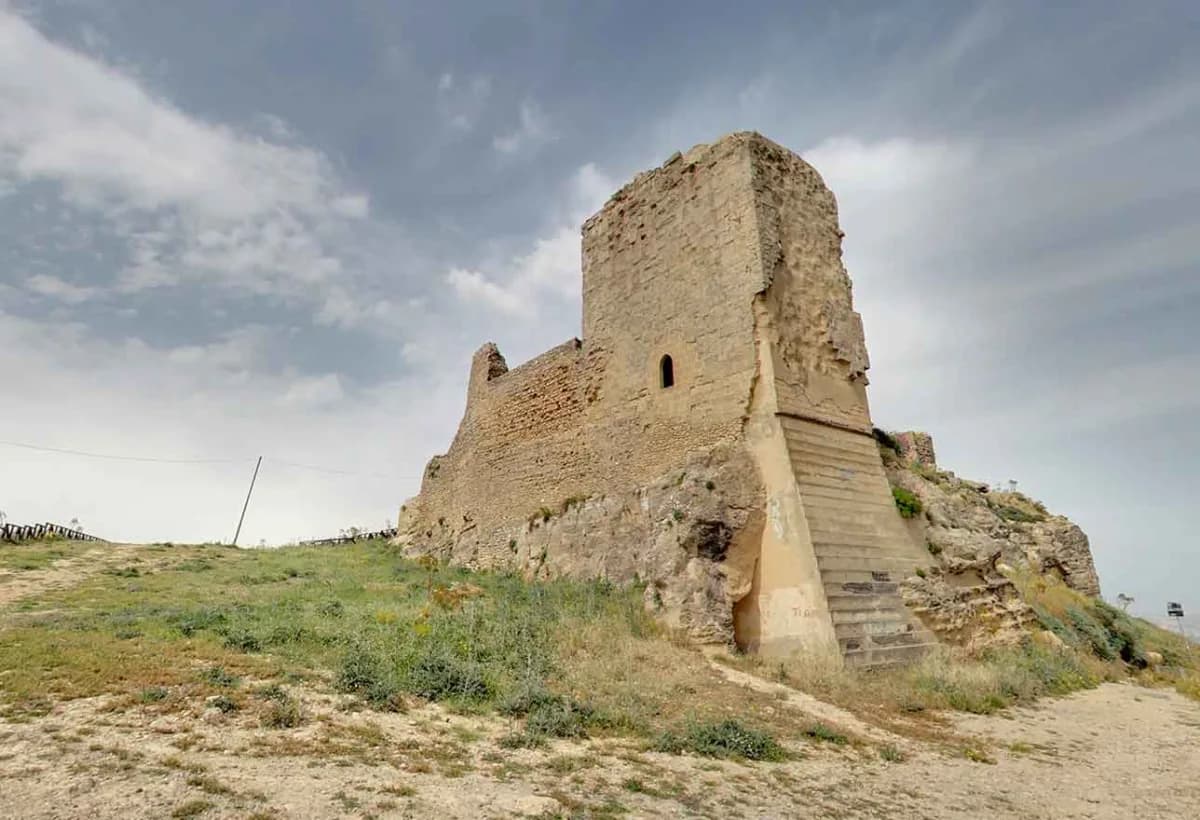
On the summit of Monte Teja, which dominates the Salso and Dittaino valleys, where a Sican settlement once stood, a Greek acropolis arose in the 4th century BC, later occupied by the Romans and transformed into an Arab stronghold around the year 1000.
On the summit of Monte Teja, which dominates the Salso and Dittaino valleys, where a Sican settlement once stood, a Greek acropolis arose in the 4th century BC, later occupied by the Romans and transformed into an Arab stronghold around the year 1000. The present form is Norman-Swabian, with defensive walls, gateways, a keep (donjon) and underground tunnels. Most of the complex's structures were restored and reinstated in the 1980s. Recently, the rooms of a 4th-century BC mint have come to light, yielding a considerable quantity of minting residue.
Via Castello, 9, Agira. Located within the urban area of Agira, at the end of a winding route along Via Diodorea and Via Grande. Accessible by bicycle, by public transport, by car/motorcycle and by taxi/shuttle.
Open every day of the year. Contact the Town Hall for visiting rules. Suitable for families with children.
Nissoria · Archaeological site
Flysch-type quartz-arenite pinnacles bearing the remains of rock-cut settlements that are still uninvestigated.
Nissoria · Woodland
A vast wooded area with the remnants of a cork-oak forest once renowned for its production; today the zone also features eucalyptus reforestation.
Assoro · Landscape & nature
East of Assoro, along the provincial road that leads from the town to the hamlet of San Giorgio, the Piano di Murra is a landscape feature of great value.