Enna
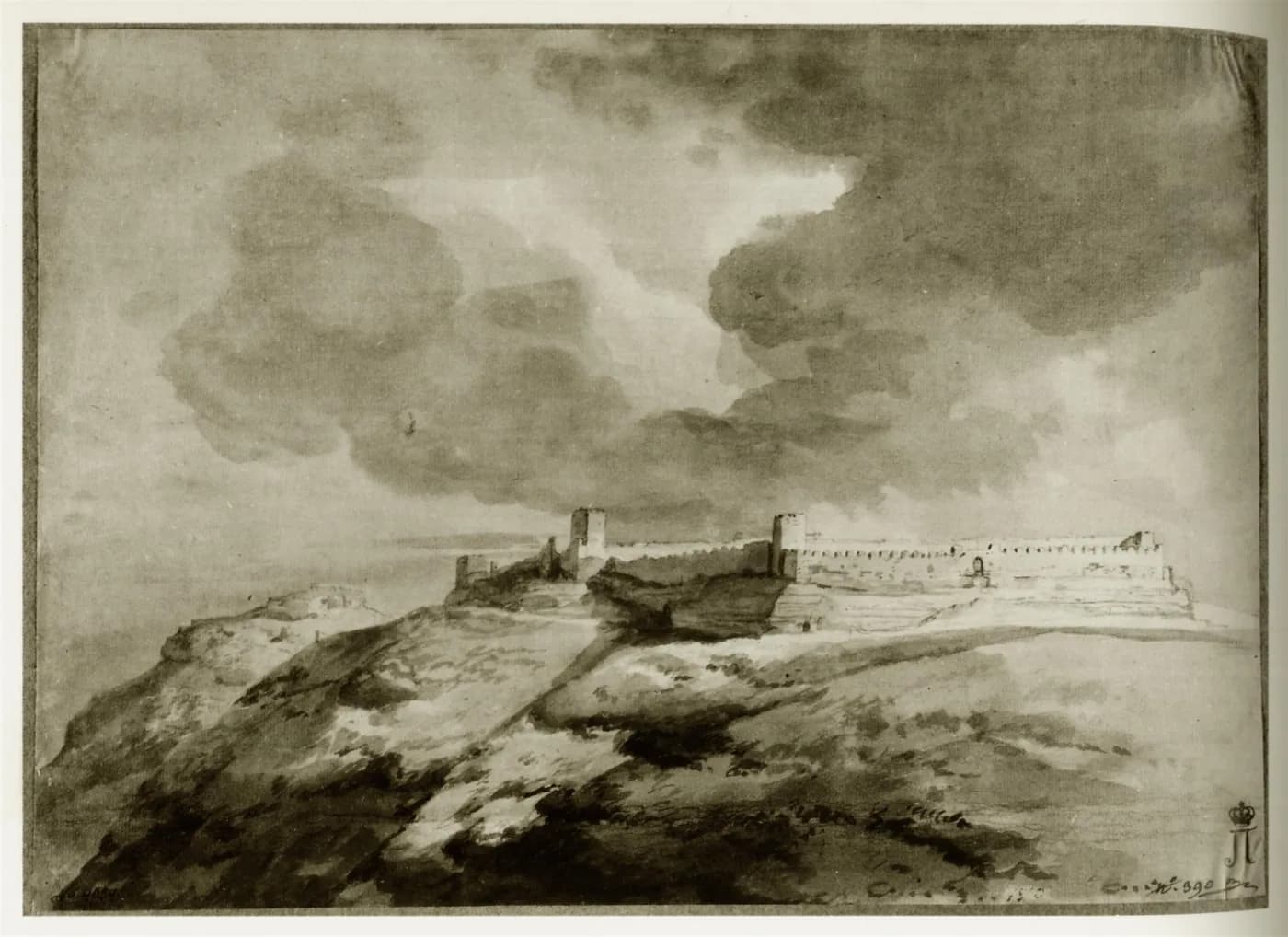
Enna is the exact opposite of the stereotype of Sicilian towns: its province does not have a single metre of land touched by the sea, the heating systems stay on from October to April, and when the fog descends the town takes on the contours of certain London neighbourhoods. Enna is in fact the highest provincial capital in Italy, casting its image over the whole panorama of heights and valleys of the Sicilian interior. Called for seven centuries “Urbs Inexpugnabilis” (the impregnable city), with the fall of Rome Enna became a Byzantine fortress and then passed into the hands of the Muslims, who made it the Islamic capital of Sicily and Arabised “Castrum Hennae” into “Qasr Yannah”, from which came “Castrogiovanni”, the name Enna bore for ten centuries until 1926. At the highest point of the crag, dominating the valley below, rises the imposing Castello di Lombardia, a mighty fortress raised in the twelfth century almost as a symbol of the protection of military power over the facing Rocca di Cerere. Today little more than an enormous boulder, this rock once bore the temple — built by the Sicani and described by Cicero — dedicated to the cult of the goddess of the harvest and of fertility, a cult that from Enna would later spread throughout the Roman Empire.
In visual connection with the Pisan tower of the Castello di Lombardia, standing isolated in its uniqueness, is the so-called Tower of Frederick, certainly designed on the model of the Swabian residences by learned hands that built, designed and willed the tower — the work of skilled craftsmen, of stonecutters, of architects such as Riccardo da Lentini, of scientists who calculated the structure to be erected.
In today’s old town one notices a revival of the town’s role as an emporium through the production and consumption of food, which takes us back to the rites and myths that were born here and take on a universal dimension: the seasons and the discovery of agriculture, settled life and community acquire the value of culture through the tale of the myth of Demeter and Kore, between the summit of Mount Altesina and the depths of Lake Pergusa, along the crests and ridges of the hills that surround the heights of Enna and Calascibetta. If it is in Lake Pergusa that the tragedy of Kore and her rebirth are played out, in the underworld her release is made conditional upon her having eaten three seeds of the pomegranate, a symbolic fruit and viaticum of new life. The pact between the underworld and the surface will be renewed every year: Enna is the pomegranate city, precisely because of its orographic configuration, with the valley of the Torcicoda stream opening its belly like a split fruit, towards the sun that dominates at midday, towards Lake Pergusa, bearing witness to the close bond between places and myths.
Besides the myth of Ceres linked to the cultivation of wheat, at Enna one also breathes the myth of Aristaeus, son of Apollo and the nymph Cyrene, a deity charged with watching over the flocks. It was he who gave men the art of curdling milk and making cheese. It is no coincidence that Enna and its district have guarded for centuries the “Piacentinu”, a pecorino made with the raw milk of Comisana breed sheep, the spicy freshness of pepper and the iodine-rich, sensual aroma of saffron, which make it a cheese unique in the world, ever present on the tables of Enna’s households and today increasingly used in the identity-driven and innovative dishes of restaurants — among which, in upper Enna, those of the Kore Siciliae Consortium stand out, contemporary interpreters of the history and myths of the territory: Tommy’s Wine, an osteria and wine bar in a small square along the central Via Roma; Il Mito di Kore, a stone’s throw from the Castello di Lombardia; Giovane Hostaria San Marco, near the belvedere.
The ancient town was laid out along two axes that cross where the springs of the Torcicoda stream rise, in a place called “la balata”: a cardo and a decumanus that lose themselves in the tangle of little streets, descending southwards along the market road. Another arm climbs eastwards to the Rocca and ends westwards on the hill of the windmill and of Maria SS. del Popolo; to the north with the Porta Palermo and Sant’Agata. Two modern roads retrace the ancient routes, shifting their crossing outward at the level of the modern and fascinating cemetery — Via Diaz and Corso Italia — and along them, and on the edges of the plateau, modern building has in part erased the ancient urban profile. It remains unchanged along the climb to the Castle, attested by the bell towers that have transformed the ancient towers into religious symbols.
The ancient town on the summit of the plateau, articulated into two offshoots, one running east–west and one north–south, extends into its valleys, slipping down from the summit to gather at the bottom in the area known as Sant’Anna and in the basin of the San Giovannello stream, reaching as far as Lake Pergusa.